
Call us now :08045477762
 Send Inquiry
 Send Inquiry
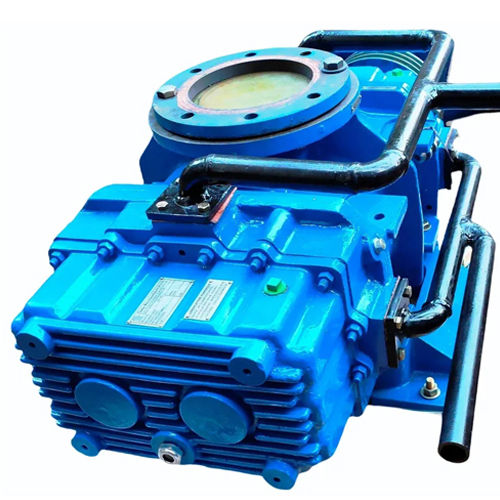
Mechanical Vapour Recompressor
MOQ : 1 Piece
Mechanical Vapour Recompressor Specification
- Equipment Type
- Mechanical Vapour Recompressor
- Usage
- Industrial
- Material
- Steel
- Size
- Standard
- Condition
- New
- Product Type
- Mechanical Vapour Recompressor
- Power Mode
- Electric
- Color
- Blue
- Warranty
- 1 Year
Mechanical Vapour Recompressor Trade Information
- Minimum Order Quantity
- 1 Piece
- Supply Ability
- 100 Pieces Per Month
- Delivery Time
- 2 Week
- Sample Available
- No
- Sample Policy
- Contact us for information regarding our sample policy
- Main Domestic Market
- All India
About Mechanical Vapour Recompressor
A Mechanical Vapor Recompressor (MVR) is a key component in energy-efficient evaporation processes, commonly used in industries like chemical processing, food and beverage production, desalination, and wastewater treatment. The MVR system helps recover and recycle vapor energy, reducing the need for additional heat sources and lowering overall energy consumption in evaporation, distillation, or concentration processes.
How Mechanical Vapor Recompressor Works:
The primary function of an MVR system is to compress low-pressure vapor produced in evaporation or distillation operations and recompress it to a higher pressure and temperature. This higher-pressure vapor is then reused within the system as a heat source, allowing for the evaporation of additional liquid.
Heres a breakdown of the process:
-
Vapor Generation:
- In many industrial processes, vapor is generated as a byproduct of liquid evaporation. For example, in the evaporation of water or solvents from chemicals, this vapor typically exists at low pressure and temperature.
-
Vapor Compression:
- The MVR unit (typically a blower or compressor) takes the low-pressure vapor and compresses it. This compression increases both the pressure and temperature of the vapor. Compressing the vapor in this way requires mechanical energy, which is typically provided by an electric motor or sometimes a steam turbine.
-
Energy Recovery:
- The recompressed, high-pressure vapor is now at a temperature that is higher than the original vapor. This makes it suitable for use as heat in the evaporation system. By using the recompressed vapor, the system can reuse the thermal energy for further evaporation, reducing the need for external energy input like additional steam, electricity, or heating.
-
Reused Vapor for Evaporation:
- The recompressed vapor is returned to the evaporator or distillation column, where its latent heat is transferred to the liquid being processed, causing it to evaporate further. In many systems, this vapor is directly passed through heat exchangers to maximize energy recovery.
-
Continuous Loop:
- This process forms a closed-loop, where the vapor is continuously compressed and reused for evaporation, significantly increasing energy efficiency and reducing operational costs.
Key Components of an MVR System:
-
Compressor/Blower: The mechanical device (blower or compressor) that compresses the low-pressure vapor. It is the heart of the MVR system, responsible for raising the pressure of the vapor.
-
Heat Exchangers: These are used to transfer the recovered heat from the compressed vapor into the liquid being evaporated. They improve the heat transfer efficiency in the system.
-
Motors/Drives: The compressor or blower is typically powered by an electric motor or steam turbine that drives the compression process.
-
Condensers (optional): In some systems, condensers may be used to help recover any latent heat from the vapor before its recompressed.
Applications of MVR Systems:
MVR technology is widely used in industries where evaporation or concentration processes are essential. Some of the key industries and applications include:
-
Chemical Industry:
- In processes like salt production, crystallization, and chemical concentration, MVR systems help recover heat from evaporating solvents or reactants, reducing the need for external heating systems.
-
Food and Beverage:
- Concentration of fruit juices, milk evaporation, and distillation all benefit from MVR systems. For example, in juice concentration, MVR systems can significantly reduce energy costs by reusing the steam generated during the evaporation process.
-
Pharmaceutical Industry:
- MVR systems are used in the concentration of active pharmaceutical ingredients (APIs) or in solvent recovery processes.
-
Desalination:
- In seawater desalination plants, MVR is used for multi-effect distillation (MED) or multi-stage flash (MSF) evaporation processes to efficiently reuse vapor and reduce energy consumption in the desalination process.
-
Wastewater Treatment:
- MVR systems are employed in wastewater treatment facilities to recover water from sludge or to concentrate waste streams, making the treatment process more energy-efficient.
Benefits of MVR Systems:
-
Energy Efficiency: By recycling the heat from vapor and reusing it for evaporation, MVR systems can cut energy consumption by as much as 40-60% compared to traditional methods that rely on external heat sources like boilers.
-
Lower Operating Costs: Reduced energy consumption directly translates into lower operational costs for industries, making MVR systems an attractive option for energy-intensive processes.
-
Environmentally Friendly: Energy savings result in fewer emissions from external heating sources (e.g., burning fossil fuels), which can reduce the environmental footprint of industrial processes.
-
Compact Design: MVR systems are often more compact and have a smaller physical footprint compared to traditional energy-intensive evaporation systems, which require large boilers and heating equipment.
-
Improved Process Control: MVR systems offer better control over temperature and pressure within the evaporation process, leading to more consistent product quality and more efficient operations.
Efficient Energy Utilization
Mechanical Vapour Recompressors significantly reduce energy consumption in industrial processes by recycling and compressing vapours, transforming waste heat into reusable energy. This leads to cost savings and improved process sustainability over time.
Robust Construction and Reliable Operation
Constructed from high-quality steel and powered by electricity, the recompressor is built for dependable performance in demanding environments. The blue finish adds aesthetic appeal and aids identification during maintenance or operation.
FAQs of Mechanical Vapour Recompressor:
Q: How does the Mechanical Vapour Recompressor benefit industrial applications?
A: This equipment enhances energy efficiency by recycling process vapours, reducing overall power consumption, and lowering operational costs, making it highly advantageous for various industrial setups.Q: What process does the Mechanical Vapour Recompressor follow during operation?
A: The device captures vapour generated during industrial heating or evaporation, compresses it, and reinjects it into the process, thereby conserving energy that would otherwise be wasted.Q: When should a Mechanical Vapour Recompressor be used in an industrial setting?
A: It is ideal for industries that use evaporation or distillation processes, particularly when there is an opportunity to recover and reuse process vapours for improved energy management.Q: Where can this Mechanical Vapour Recompressor be installed?
A: It is suitable for installation in factories and plants across India, especially within sectors such as chemical processing, pharmaceuticals, and food manufacturing.Q: What are the usage requirements for this Mechanical Vapour Recompressor?
A: The equipment requires an electric power source and standard installation practices for industrial machinery. Regular maintenance helps ensure optimal performance and longevity.Q: What warranty does the Mechanical Vapour Recompressor include?
A: Every new unit is backed by a one-year warranty, covering manufacturing defects and providing support for service-related issues during the initial period of operation.Q: How can I purchase and receive service for this equipment in India?
A: As a reliable supplier, exporter, and service provider, the manufacturer offers sales and after-sales support across India, facilitating purchase, installation, and maintenance services for industrial clients.
Tell us about your requirement

Price:
Quantity
Select Unit
- 50
- 100
- 200
- 250
- 500
- 1000+
Additional detail
Mobile number
Email

More Products in Booster Category
Mechanical Vacuum Booster
Price 200000.0 INR / Unit
Minimum Order Quantity : 1 Unit
Condition : New
Color : Blue
Equipment Type : Mechanical Vacuum Booster
Power Mode : Electric

MVR Blower
Price 200000.0 INR / Unit
Minimum Order Quantity : 1 Unit
Condition : New
Color : Blue
Equipment Type : MVR Blower
Power Mode : Electric

Conveyor Booster
Price 120000.0 INR / Unit
Minimum Order Quantity : 1 Unit
Condition : New
Color : Blue
Equipment Type : Conveyor Booster
Power Mode : Electric

 Send Inquiry


Our Products


D-29, Site-B, Industrial Area, Surajpur, Greater Noida,Greater Noida - 201310, Uttar Pradesh, India

Mr Anand Kumar
(Sales Engineer)
Mobile :08045477762
 Send Inquiry
 Send SMS
 Call Me Free
Developed and Managed by Infocom Network Private Limited.


